New York weather,
live right now
It's 15°C and light drizzle in New York. Local time 08:45, sunset at 18:21.
Live
Times Square
15°
🌦Light drizzle
Feels like 13° · UV 0
Wind
14 km/h
east-northeasterly
Humidity
82%
Rain
0.1 mm
Pressure
1028 hPa
Sunrise → Sunset
07:02 → 18:21
11h 19m daylight
Air Quality
45 · Good
PM2.5 · 23 µg/m³
The week ahead
Today
17°
13°
91%
Mon
20°
14°
42%
Tue
21°
15°
— dry —
Wed
28°
18°
9%
Thu
21°
15°
— dry —
Fri
20°
14°
38%
Sat
16°
4°
— dry —
Hour by hour
now
12
16
20
00
04
Temperature, next 24h
More cams in New York
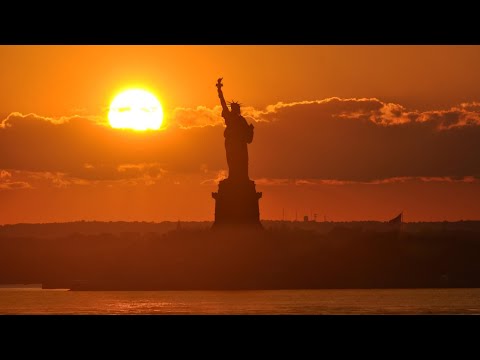
Statue of Liberty
Hudson view
What's it like
In New York, right now.
Rain in New York — 0.1mm. The avenues turn glassy, the umbrellas multiply, the Met fills up. Times Square stays packed (umbrellas welcome) and the subway becomes your best friend.
Rainy · indoor picks
Where New York goes when it rains
Curated for today's rain — dry, cosy, worth the detour.
Curated picks — we may earn a small commission, never at extra cost to you.
Common questions
What are the best months to visit New York weather-wise?
Late April-June and September-October. Mild (15-24°C), low humidity, perfect walking weather. May has Central Park in full bloom; September has the city back from summer fatigue, restaurants reopening, golden light. Avoid July-August (32-38°C with brutal humidity) and January-February (-5 to 3°C with snowstorms). Late October-November can be brilliant but unpredictable — pack layers.
What should I pack for New York by season?
Summer (Jun-Aug): light shirts, breathable shorts, sandals, refillable water bottle. The humidity is the killer — choose linen/cotton, avoid synthetic. Winter (Dec-Feb): proper insulated coat, waterproof boots, hat, gloves, thermal layers. -10°C nights happen. Spring/autumn: layers, light jacket, comfortable walking shoes (you'll walk 15-20km a day). Skip umbrellas in winter wind; they just break.
What can you do in New York when it rains?
Museums, museums, museums. The Met needs a full day. MoMA half a day. The Natural History Museum, the Guggenheim, the Whitney — all rain sanctuaries. Smaller gems: Tenement Museum, Frick Collection, Morgan Library. Take refuge in the New York Public Library main branch (free, gorgeous, dry). Grand Central oyster bar for lunch. Browse Strand bookstore. End with cocktails at a hotel bar — the Ace, the NoMad, the Beekman. New Yorkers don't slow down for rain; you shouldn't either.
How does the heat dome affect New York in summer?
Heat domes — stationary high-pressure systems trapping hot air — hit New York 2-4 times each summer, pushing temps to 35-40°C with 80%+ humidity. Concrete and asphalt make it feel 5°C hotter. The subway becomes an oven during outages. Practical strategy: cool down in museum AC during 12:00-16:00, stay hydrated, avoid Times Square (no shade, max heat reflection), seek refuge at the High Line in early morning. Heat-related ER visits spike during these days.